Slabs we pour around Rye
A slab is a flat, stand-alone piece of concrete that carries equipment or a building rather than foot traffic or cars. In Rye that covers a wider range of jobs than people expect:
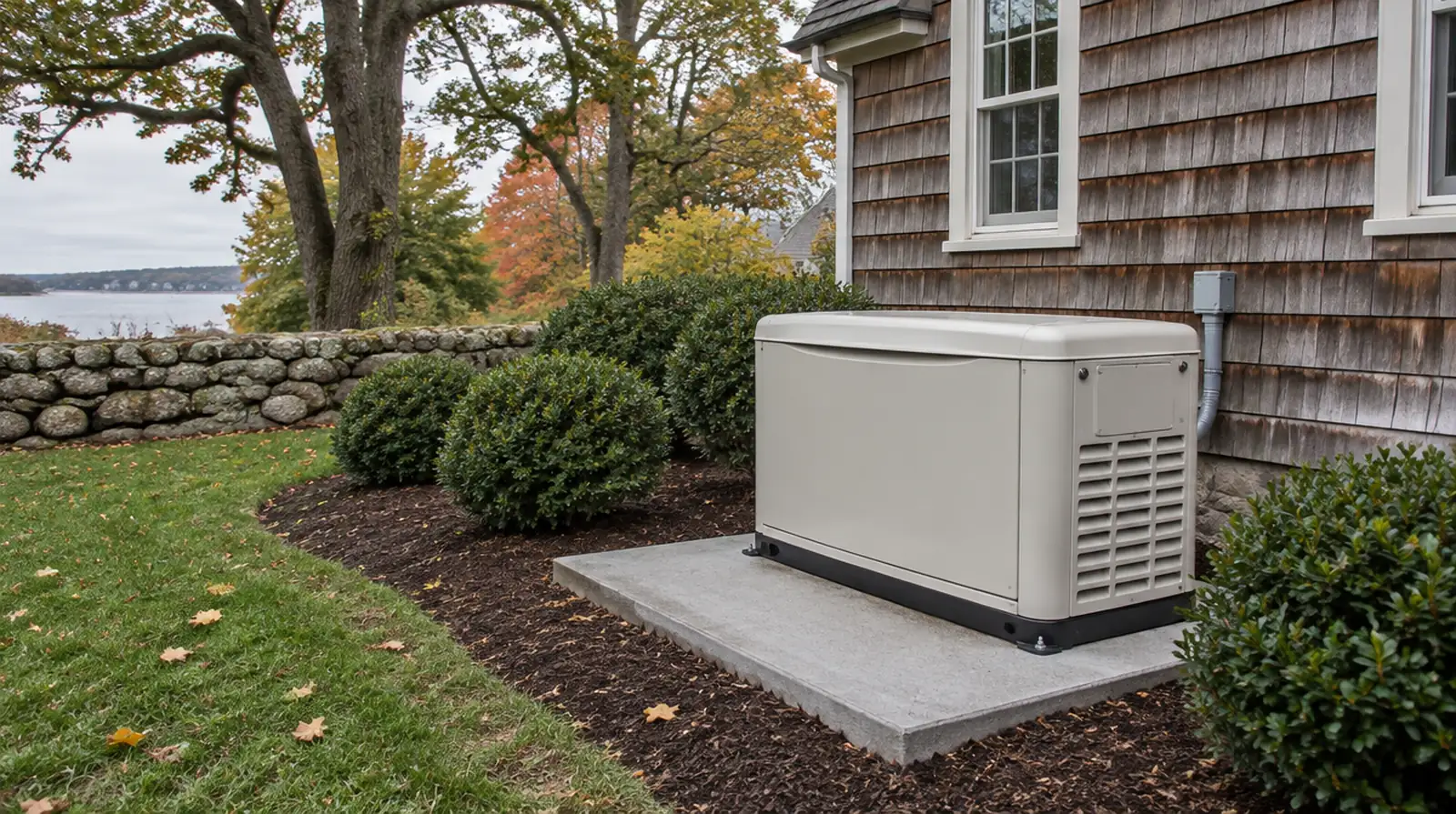
- Generator pads. Whole-house generators have become common after long outages from hurricanes Sandy and Ida. The pad has to be level, sized to the unit and set at the clearances the manufacturer and the building department require from windows, doors and the property line.
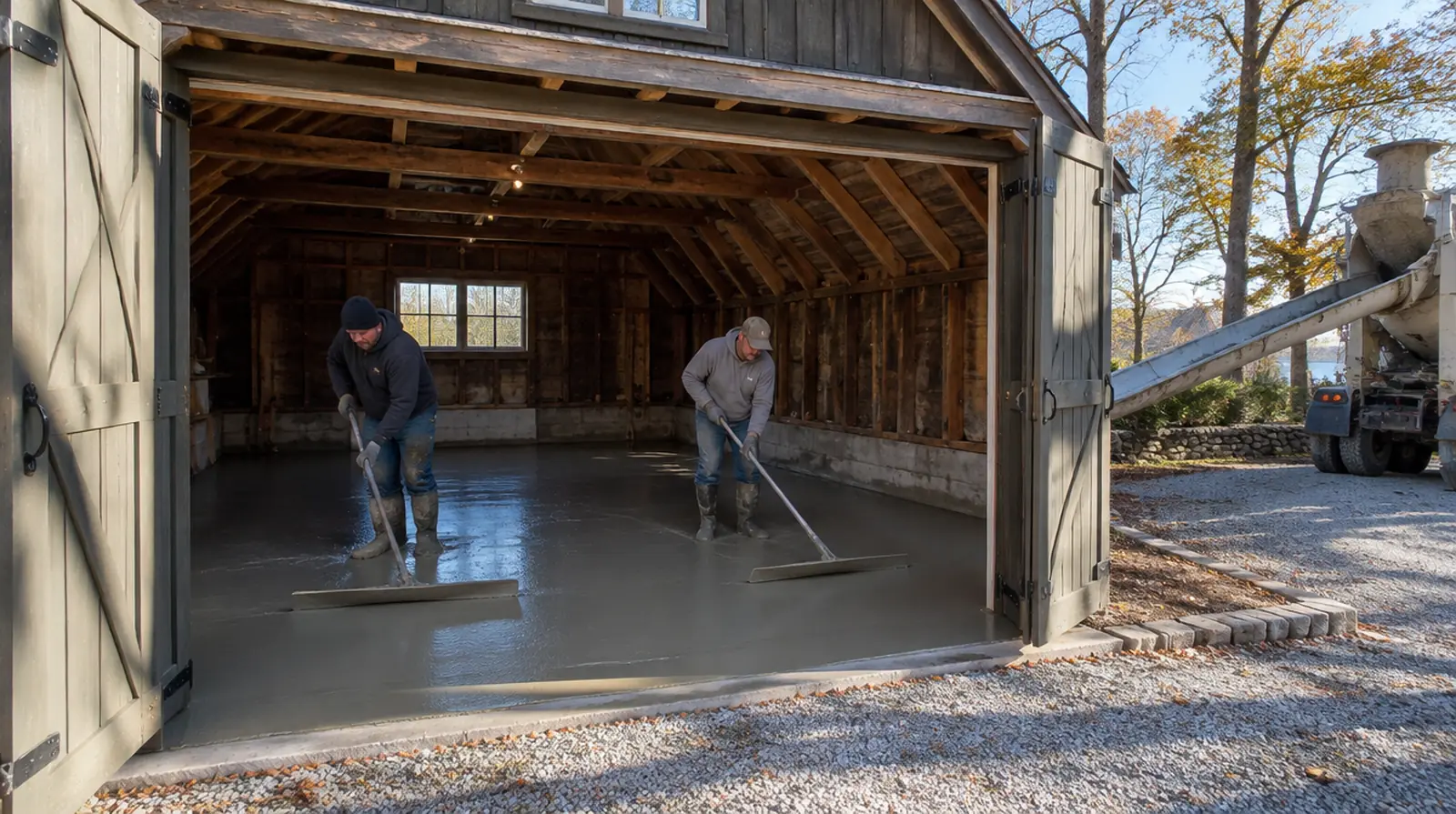
- Old garage floors. Many detached garages behind 1910s to 1930s homes were built with thin floors on dirt. Those floors crack, heave and hold puddles. We break them out and pour a new reinforced floor sloped to the door.
- Shed and pool house pads, including bases for prefab sheds and greenhouses.
- Hot tub pads with a sleeve set for the electrical feed.
- Heat pump and AC condenser pads, which have become more common as owners of older houses switch away from oil heat.
- Trash and recycling pads by the side door or the end of the drive.
Structural work under occupied rooms is a different category that needs an engineer, and we will tell you when a job crosses that line.
Rock, roots and water
Rye sits on old, hard bedrock, and on many lots it comes close to the surface. Dig a foot in some yards and you hit ledge. Dig in the next yard over and you find wet clay or old fill. We probe before we price, because the base plan changes completely between the two. On ledge we can often pour a thinner base and pin the slab. Over clay or fill we excavate deeper and bring in compacted crushed stone so the slab does not rock with every frost.
Big trees are the second issue. The oaks, maples and beeches that shade so many Rye streets push roots under anything nearby. We cut cleanly where needed and keep the slab away from the trunk. If a root is too large to cut safely, we would rather shift the pad than lose the tree.
Water is the third. Near the shore and along Blind Brook, some lots sit in mapped flood zones, where equipment often has to sit at or above a set elevation. A raised pad, or a pad with a raised platform for the generator, may be needed. Ask the building department about your lot before you pick a spot.
Concrete that holds up to winter here
Every slab we pour outside gets an air-entrained mix. The tiny air bubbles give freezing water room to expand, which is what keeps the surface from flaking after a few winters of thaw and refreeze. We add wire mesh or rebar based on the load, cut control joints to a pattern that suits the size, and cure the slab properly instead of letting it dry out in a day.
Salt is the enemy of young concrete. Keep rock salt off a new slab for its first winter, and use sand for traction instead. A penetrating sealer applied once the concrete has cured adds another layer of protection, and we can apply it for you. If you already have a slab that is flaking or cracked, our concrete repair page explains when it can be saved.
Permits and timing
A simple pad on its own may not need a permit, but what you put on it often does. Generators, spas and accessory buildings in Rye generally go through the building department, and the pad location is part of that review. We work with your electrician or generator installer so the pad, conduit and clearances line up with their plan.
Most slabs take one day to form and one day to pour. You can usually walk on it the next day. Equipment can typically be set after about a week, and we will confirm for your job. Late spring through fall is the easiest season, but small pads can be poured in early winter with blankets and the right mix.
Questions we hear
Why not just set the generator on a plastic pad?
Some units ship with a composite pad, and on firm, level ground that can work. On Rye's mix of rock, roots and frost, a poured concrete pad gives a flatter, more stable base that will not tilt as the ground moves.
Can you match the finish on my driveway or patio?
We can match a broom finish closely. Decorative surfaces take more work. See our pages on patios and stamped concrete for those options.
Planning a pad or a new garage floor?
Call (914) 529-6715 and tell us what the slab needs to carry. We will check the site, the rock and the drainage, then send a written estimate.