Why stain instead of paint or tile
Paint sits on top of concrete and peels when moisture pushes up from below. Tile cracks when the slab moves. A stain goes into the surface of the concrete itself, so there is nothing to flake off. Acid stains react with the lime in the cement and leave a variegated, marbled color that no two slabs share. Water-based stains soak in and give a more even, predictable tone in a wider range of colors, including grays and blacks that acid stains cannot produce.
For Rye homeowners, the appeal is usually practical as well as visual. A stained basement floor shrugs off a little water. A stained porch does not show salt residue the way a bare slab does. And a stained patio next to a pool stays cooler and less glaring than white concrete.
Where we stain concrete around Rye
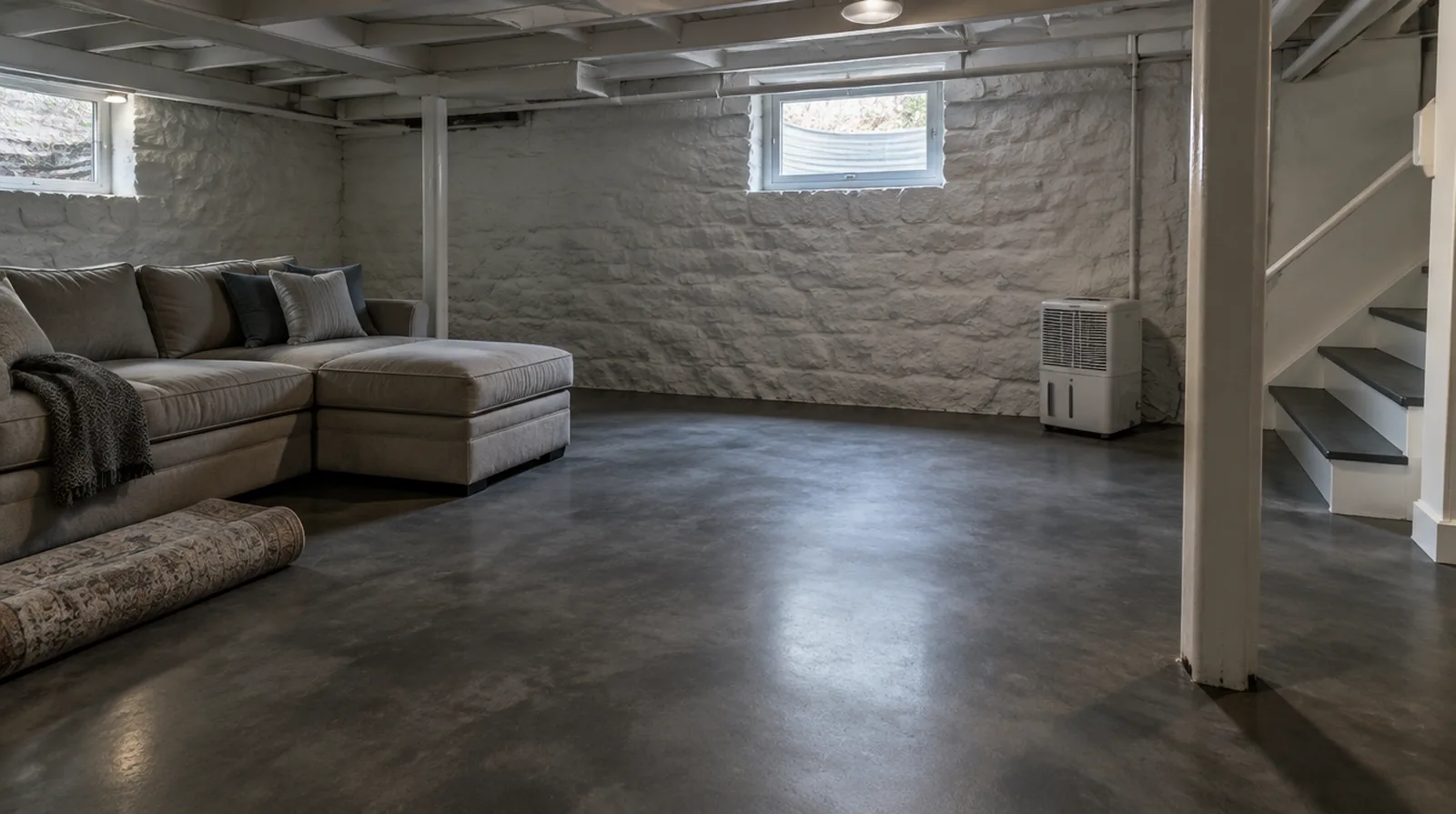
Basements. Many of the Tudors and Colonials built between the 1910s and 1930s in neighborhoods like Rye Gardens, Indian Village and the streets off Forest Avenue have full basements with old slabs that were never meant to be seen. When owners finish those spaces, a stain is often the best floor because it handles the occasional damp spot. Homes in the low areas near Blind Brook, which has flooded downtown more than once, benefit most: a stained and sealed slab can be cleaned and dried after water comes in, while carpet and laminate have to be torn out.
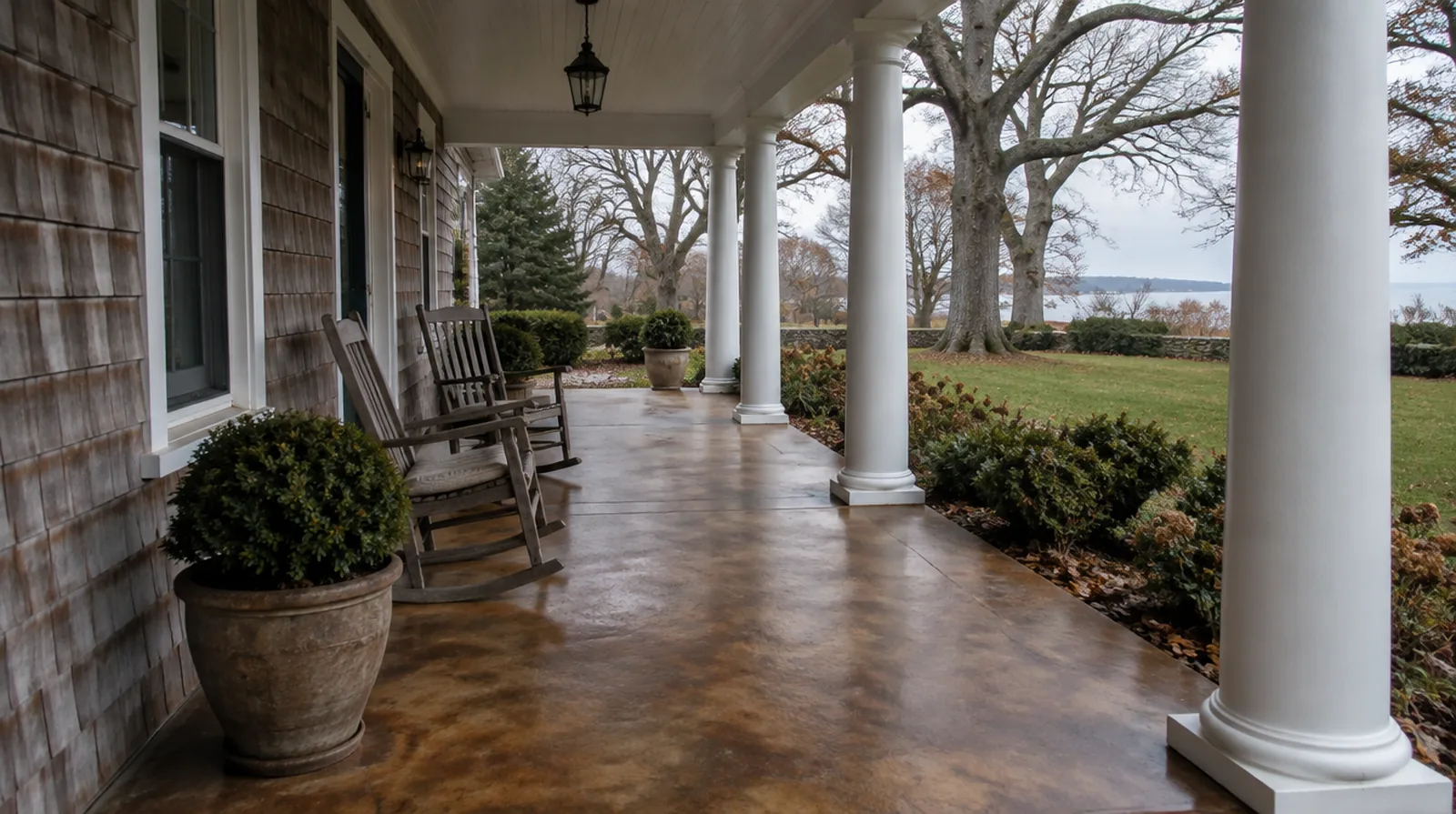
Porches and entries. Covered porches on shingle-style and Colonial Revival houses often have concrete floors under layers of old porch paint. Once we strip the paint, a brown or terracotta stain gives a look closer to the original era of the house.
Patios and pool surrounds. Near Milton Point, Oakland Beach and the streets around Rye Town Park, outdoor concrete takes salt air and spray. Stains hold their color outside when they are sealed with a UV-stable, breathable sealer and resealed every few years.
Garages and workshops. A stain under a clear sealer gives a garage floor some color without the cost of a full coating system. It will not resist hot tire pickup the way epoxy does, so we tell you up front if your use calls for something tougher.
How a stain job goes
Testing the slab. Every slab takes stain differently. Old concrete with a lot of patching, sealers soaked in from years ago, or a hard steel-troweled finish can all change the result. We test a small hidden spot first so you see the actual color on your floor, not on a sample board.
Cleaning and opening the surface. Paint, mastic, adhesive and old sealer must come off. We grind or strip them, then clean the floor so the stain can soak in evenly. Cracks get filled; we explain beforehand that patched areas usually take color a little differently.
Applying the stain. Acid stains go on in layers and are neutralized and rinsed when they have developed. Water-based stains are sprayed or worked in by hand, often in two tones to add depth.
Sealing. Indoors we use a sealer that lets the slab breathe, which matters in basements where vapor moves up through the floor. Outdoors we choose a sealer that handles UV and salt. On porches and pool decks we add a fine grit so the surface is not slick when wet.
Rye weather and stained concrete
Westchester winters bring repeated freeze and thaw, and Rye adds salt from the Sound and from treated roads and sidewalks. Salt does not destroy a stain, but it attacks unsealed concrete and wears down sealer. Plan on resealing exterior stained surfaces every two to four years, depending on sun and traffic. Interior floors need much less: a fresh coat of sealer or a maintenance wax every few years keeps them looking good.
We schedule outdoor stain work from spring into fall, when the slab is dry and temperatures stay well above freezing overnight. Basements can be stained year-round as long as the space is heated and we can run a dehumidifier.
Questions homeowners ask
Can you stain a new slab? Yes, after it has cured for about a month. If we are pouring the slab, we can plan the finish with staining in mind.
Will stain hide stains and patches? It blends many of them, but a stain is translucent. If the slab is badly patched or marked, a solid concrete overlay or a different finish may suit it better, and we will say so.
How is it different from stamped concrete? Stamping is done when new concrete is poured and adds texture. Staining adds color to existing or new concrete and leaves the texture you already have.
Talk about a stained floor
Call (914) 529-6715 and we will come out, look at the slab and test a stain sample.